
““It feels like NLA has its pulse on trends that are coming up in the movement space that are going to hit hard and soon. And they are working to address them in a way that is digestible for folks doing the work on the ground.” ”
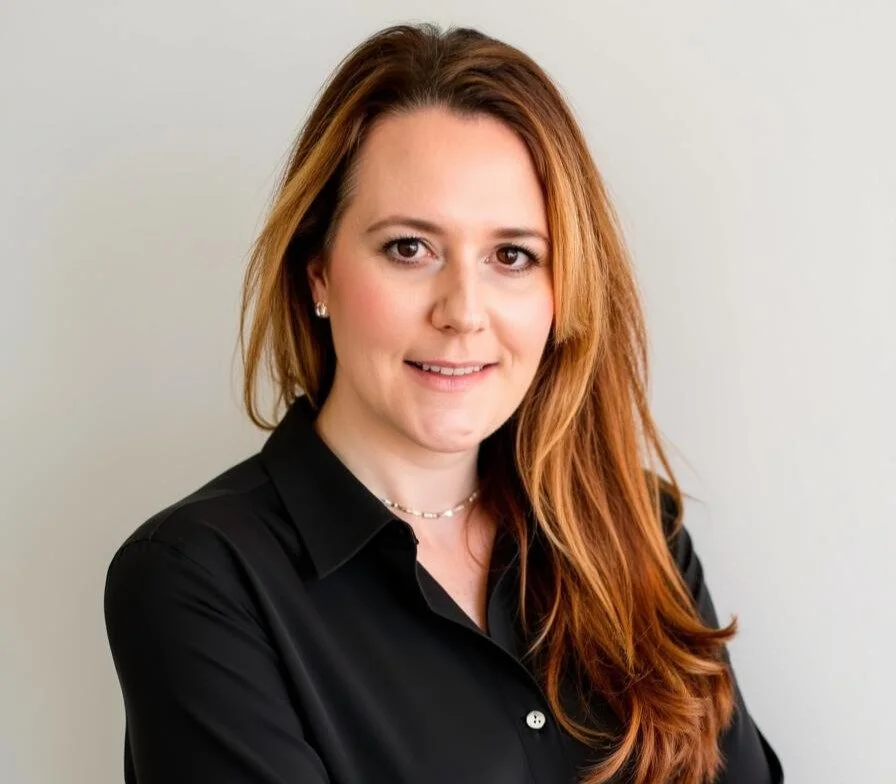
A true citizen of the world, Philippa (Phil) Wood has lived, studied, and formed community with people all over the globe. Though she is originally from the East Coast, with time spent between New York and Connecticut, she grew up influenced by her English parents’ international outlook and global careers, and she developed her own curiosity about the world and the systems that shape it. As a young adult, she earned degrees in political science and journalism from The George Washington University, which gave her early exposure to the systems and stories that would later show up in her work.
That early exposure became the foundation for a deeper understanding of how power and policy shape people’s lives. “As you start unpacking politics and government systems and the ways laws are created in this country, you begin to see why social movements matter—and how broken many of those structures are. It makes clear why we should all be fighting for liberation for our neighbors and the people we share community with,” she said. “Being a white woman in America and having to go through my own journey of understanding systemic and institutional racism, I realized that’s a journey that will never end. It’s given me perspective.”
During college in Washington, DC, Phil worked in communications at the international humanitarian agency CARE. After graduating, she moved to Brussels to work for the European Network on Debt and Development (EURODAD), supporting media and public relations efforts. In addition to the nuts and bolts of communications, she was also learning a vital lesson that would stay with her throughout her career: lending from Western countries to countries in the Global South, though well-intentioned, can often perpetuate unequal power dynamics between donor countries and smaller nations. It was an early lesson that would influence how she approached the work going forward.
After leaving EURODAD, Phil joined the Peace Corps and volunteered as a Community & Health Organizer in Guatemala for twenty seven months. It was a stark departure from her work with a global debt and lending nonprofit. Working in a small rural village, Phil supported the education of community members on topics such as reproductive health and hygiene. She also worked for the Gender and Development Committee to cultivate a shared understanding among volunteers of gender dynamics in the developing world.
All of this sounds incredibly official on paper, but Phil describes it with a healthy dose of humility: “I worked in the mayor's office helping women have a vote specifically for access to education and making sure curriculum was in their indigenous language—K'iche'.”
She remembers how many girls she talked to who never considered continuing their education or having a career—both because it wasn’t presented as the ultimate goal for them and because they just didn’t have the means. Recalling the time she tried to encourage a teenage girl she got to know in her village to consider becoming a nurse, Phil remembers how matter-of-factly she brushed the idea off because her parents only had enough money to put her brothers through school.
“I remember thinking about that a lot and growing deeply empathetic. It makes sense,” she says. “How lucky am I that I never had to make that tradeoff?” Though Phil, who was in her early twenties at the time, was already aware of the socio-economic advantages that she was born into, the experience was a marked contrast between their lives. “Selfishly, it was helpful to me to understand and have a clear view of my own privilege and how that has skewed my expectations for a future,” she said.
It was a life lesson that would only be reiterated in her next phase. After working with the Peace Corps, Phil moved back across the globe to study Governance and Development at the University of Sussex. Because of the nature of the program, which was housed at the Institute of Development Studies (IDS), her class of peers was deeply diverse, with students from Asia, Africa, and the Americas. One huge difference she noticed right away was that her classmates came to IDS to learn how they could contribute to the improvement of their home countries. Her goal was different. “My expectation was that I would go to other countries to do that—not my own.”
After earning her Master’s degree from University of Sussex, Phil moved back to Washington, DC where she spent over four years working with the National Democratic Institute (NDI). Again, she talks about the work in the simplest terms: “I worked on democratic strengthening in Asia, Eurasia, and Latin America to help political parties think about how they can be more lowercase ‘d’ democratic, asking questions like how are you increasing representation of women, nonbinary people, people who speak other languages, etc.?” She was promoted several times at NDI, starting as a Public Affairs Project Assistant but ultimately moving into a role as a Senior Program Officer for Political Party Programming.
Ahead of the 2018 mid-term elections, she moved to Texas to use her experience supporting the Texas Democratic Party. As Training and Programming Director, she traveled around the state talking with voters to understand how the party could better reflect their needs and priorities and sharing that knowledge with campaign staff and GOTV volunteers. She worked with county parties, campaign staff, and volunteers to help demystify the rules around VAN, voter registration, and other core campaign requirements.
Wanting to address some of the structural challenges she had seen firsthand, she then became the Executive Director of Change the Game, a nonprofit working to help diversify the field of progressive data by building pathways into data roles. In that role, Phil helped build out the organization’s infrastructure, including the launch of an affiliated 501(c)(4) entity and the development of a learning management system to support training programs.
She later moved to Iconico in 2022 to serve as a Managing Director. There she helped create career pathways for campaign organizers who were aging out of the precarity of election cycle work. At Iconico, her work emphasized practical, real-world use of data and operations, she explains: “If you’re an organizing director, you can use this data to understand why your doorknocking campaign went the way it did or where you need to adjust.”
These later roles moved her squarely into the world of movement and nonprofit strategy. In fact, while working at Iconico, Phil discovered an organization that was on the leading edge of multi-entity strategy. “I met Deb (Barron, New Left Accelerator’s founder and co-executive director) in my role at Iconico, and she was talking about things that weren’t very mainstream at the time,” Phil remembers. “It feels like NLA has its pulse on trends that are coming up in the movement space that are going to hit hard and soon. And they are working to address them in a way that is digestible for folks doing the work on the ground.”
She was so enthusiastic about NLA’s approach to movement building that she joined the team in May 2025 as the organization's first Chief Program Strategy Officer. Though she’s not yet a year in, she’s had a huge impact on the organization already, helping to launch the Shared Legal Learning initiative and designing state-based work to meet the policy and political landscape of 2026. This includes close collaboration with NLA’s new Senior Program Director, Julieta Garibay and The Capacity Shop Managing Director Melinda Gibson.
Phil says leaning into the true team dynamic they are building at the organization is one of her favorite parts of the job: “It’s hard to take credit for any one thing because one of the cool things about working here is that everything is so collaborative.”
